

UK National Quantum Technologies Showcase 2026
Published: 17 November 2026
The QEPNT Team exhibited key technologies and made new connections at the Quantum Showcase.
The QEPNT team engaged with new companies, investors, academics and members of the quantum community at the UK National Quantum Technologies Showcase in London on 6th of November.
Organised by Innovate UK in collaboration with UK National Quantum Technologies Programme, the event is the UK’s largest quantum industry showcase and conference. This year, it attracted more than 130 exhibitors and 2,900 delegates.
The showcase presented the latest in ground-breaking applications of the technology which will potentially revolutionise many aspects of life in the UK. Quantum technologies could bring enormous benefits to the economy, such as making it possible to solve complex problems impossible to solve with even the most powerful high-performance classical computers, and opening entirely new frontiers in sensing, timing, imaging, and communications.
The Hub showcased a live demo of a portable quantum magnetometer, a highly sensitive instrument that can detect variations in the Earth's magnetic field with extreme precision. Developed by researchers at the University of Strathclyde, the magnetometer has potential applications in geological surveying, archaeology and security as well as for quantum navigation systems for use in aircraft.
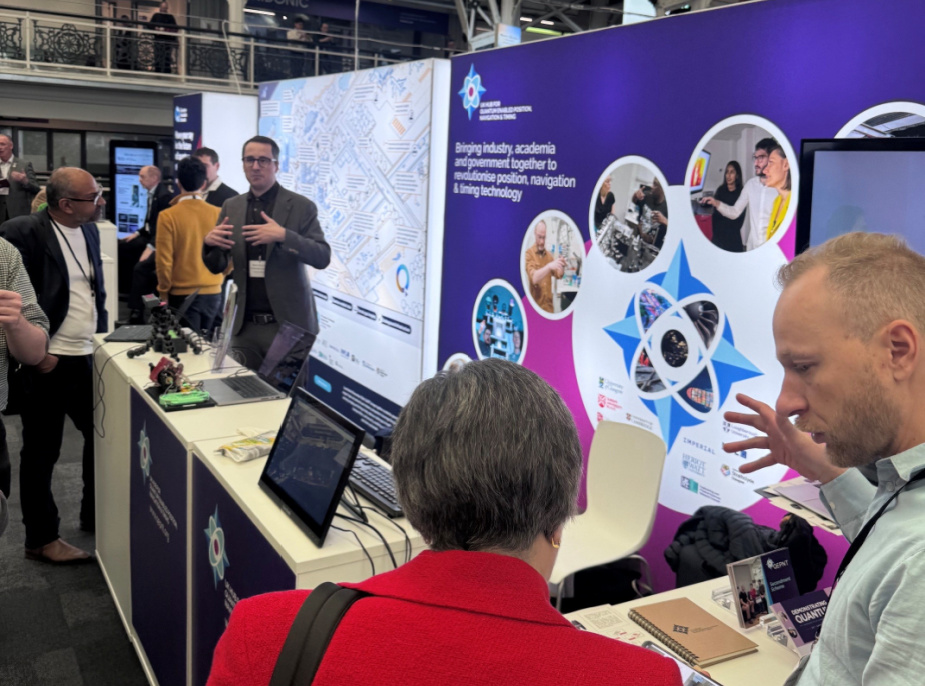
Heriot Watt researchers brought a virtual reality demo for visualising 3D environments acquired with single-photon cameras, a great way for visualising single-photon data. Our Loughborough colleagues demonstrated some of their micro-lasers which serve as the ‘counter’ for future portable atomic clocks. The team are driving the next generation of atomic clocks with the ambition to make them more compact, portable and lower cost.
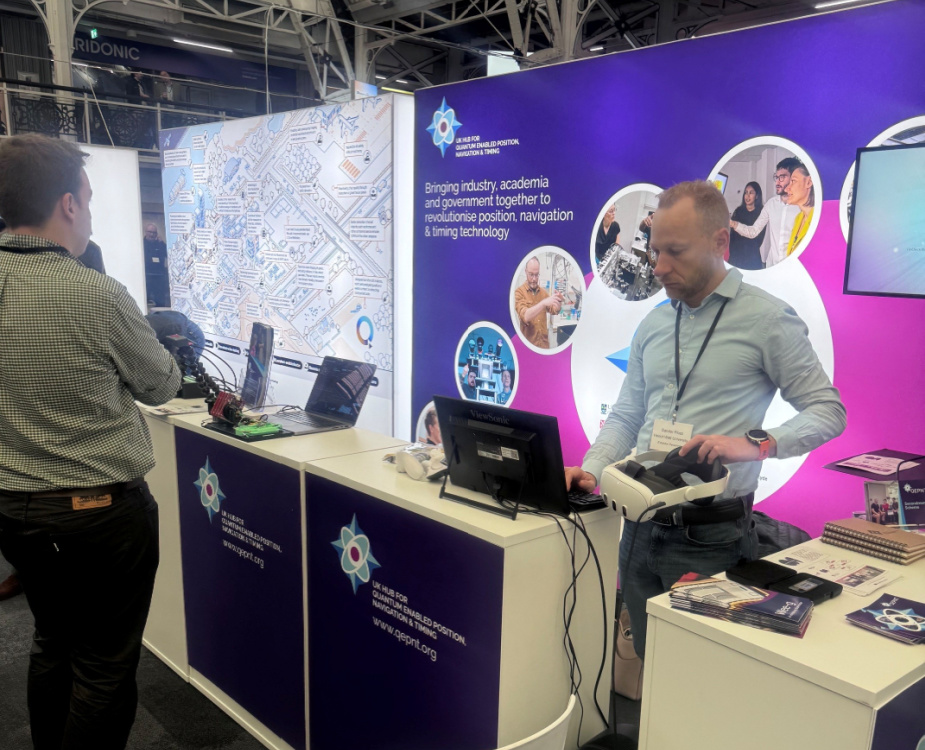
The QEPNT stand also featured Wee-g, a lightweight gravimeter, developed by researchers at the University of Glasgow, which has been used at Poás volcano, Costa Rica, to collect invaluable data with the potential to be used in early warning systems and to aid volcanologists in understanding complex volcanic systems.
Professor Doug Paul presented on the Hub's achievements at the session exploring the role of the UK Quantum Hubs in advancing quantum capability and supporting the UK's ambitions to become a leading quantum economy.
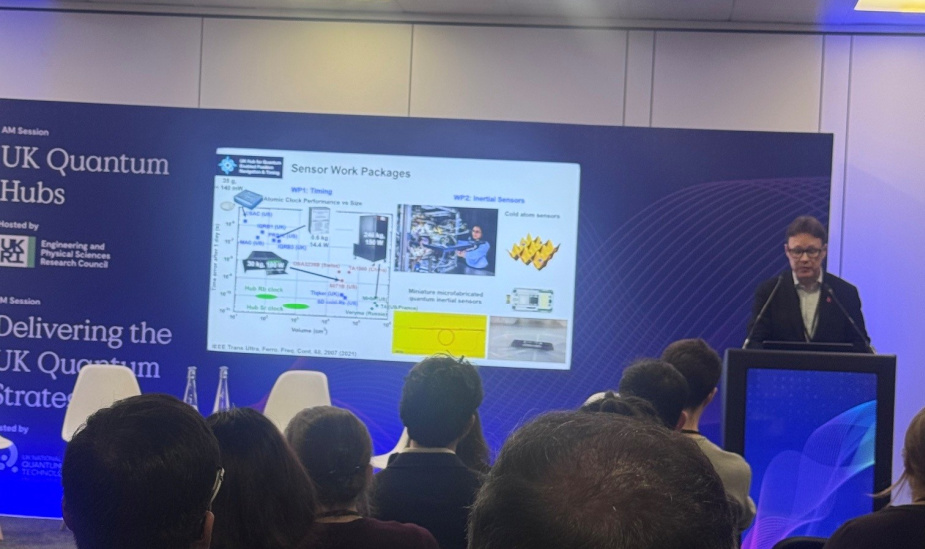
Following the presentations, QEPNT Directo Professor David Cumming joined representatives from the other Quantum Hubs for a panel discussion on the future of the UK quantum sector. Chaired by Liam Boyle from EPSRC, the discussion explored the roles the Hubs play supporting the UK's position as one of the world's leading quantum nations.

First published: 17 November 2026
<< News